Another Authoritative Recognition: Unisound's Shouya Agent Platform Selected for the Beijing Federation of Industry and Commerce's Outstanding Cases of Integrated Development of Technological and Industrial Innovation in the Capital's Private Economy
Recently, the Capital Private Economy Innovation and Development Conference, hosted by the Beijing Federation of Industry and Commerce, was successfully held. Focusing on the deep integration of technological and industrial innovation in the private economy, the conference unveiled its Outstanding Cases of Integrated Development of Technological and Industrial Innovation in the Capital's Private Economy. In recognition of Unisound's continued exploration of AI technology innovation and industry practice, the Shouya Agent Platform was selected for inclusion.
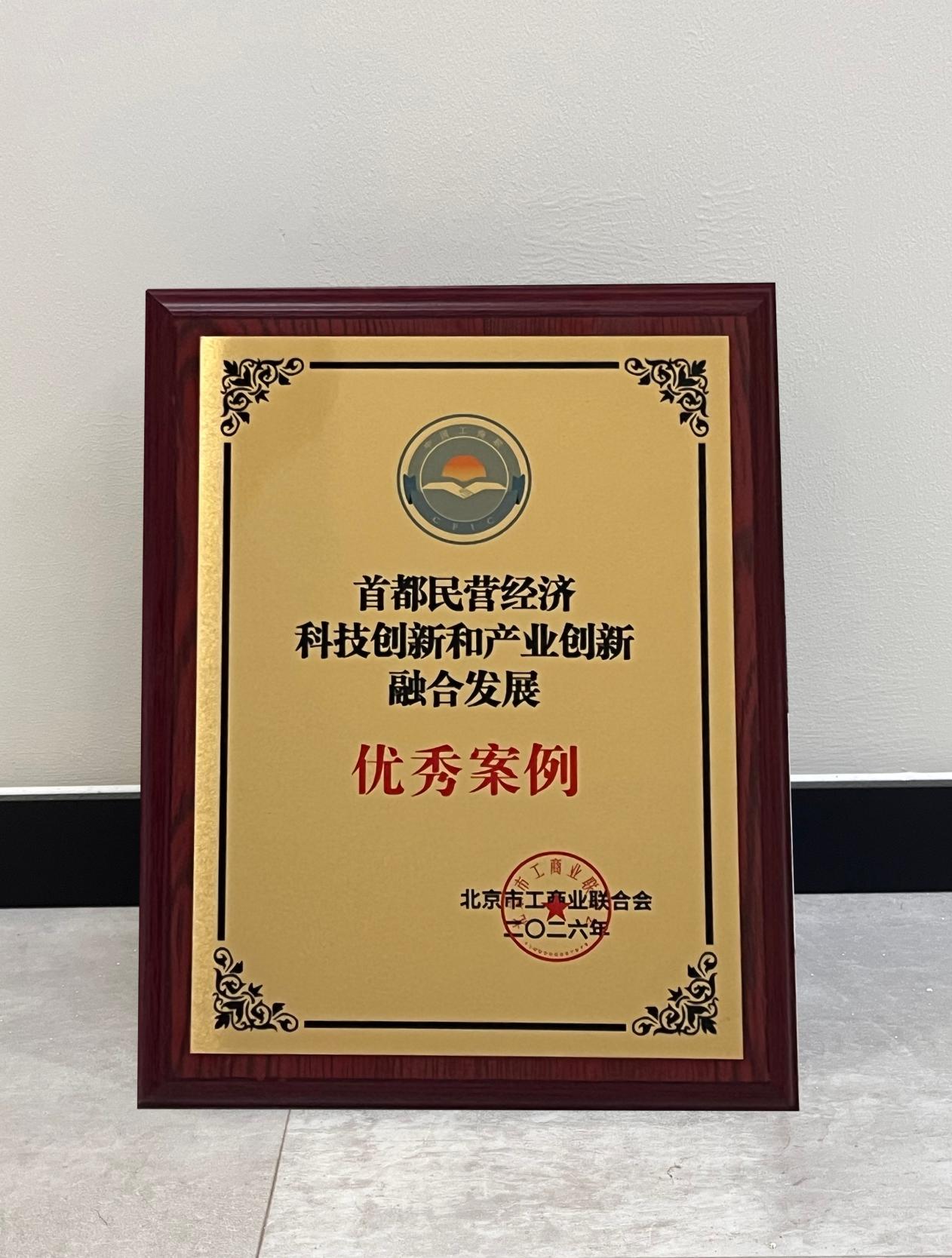
Previously, the Shouya Agent Platform was selected as a Typical Case of AI Application by the Ministry of Industry and Information Technology. Its latest recognition from the Beijing Federation of Industry and Commerce further demonstrates Unisound's achievements in industrializing AI technology and deploying it at scale.
From 'Answering Questions' to 'Executing Tasks': Bringing AI into Business Workflows
As artificial intelligence enters a stage of deeper industry adoption, enterprise demand for AI is shifting from 'model capabilities' to 'business value.'
Instead of merely providing Q&A and content-generation capabilities, enterprises need an intelligent system that can understand the business, connect data, invoke tools, and complete tasks end to end. Such a system brings AI into production workflows and turns it into a sustainably operated source of productivity.
To address this need, Unisound developed the Shouya Agent Platform, building end-to-end industrial AI capabilities across 'Models - Data - Agents - Applications' and enabling large models to move from 'passive response' to 'proactive execution.'
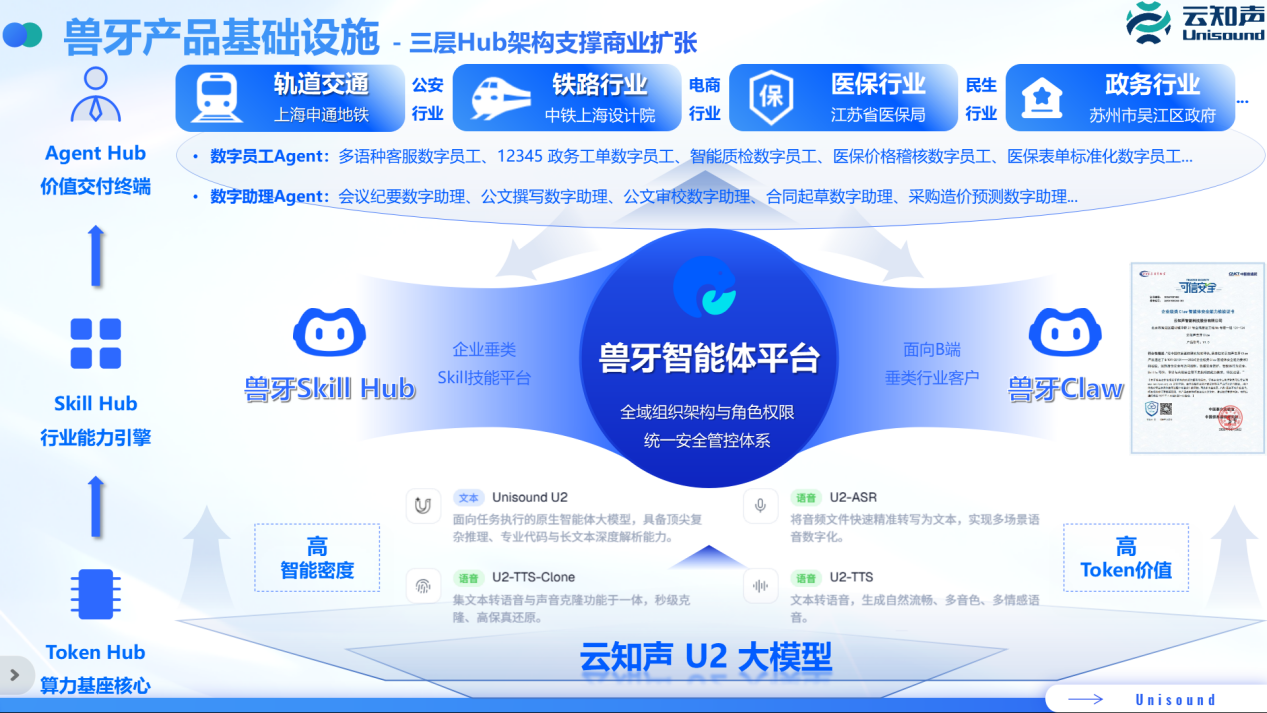
Supporting the full enterprise AI journey from pilot to scaled adoption, the platform has developed a three-tier progressive system comprising product foundation - FDU delivery - industry assets. It spans POC validation, project delivery, business operations, and subsequent continuous iteration, helping enterprises address real challenges: AI projects that can be tested but are difficult to deploy, or can go live but are difficult to sustain.
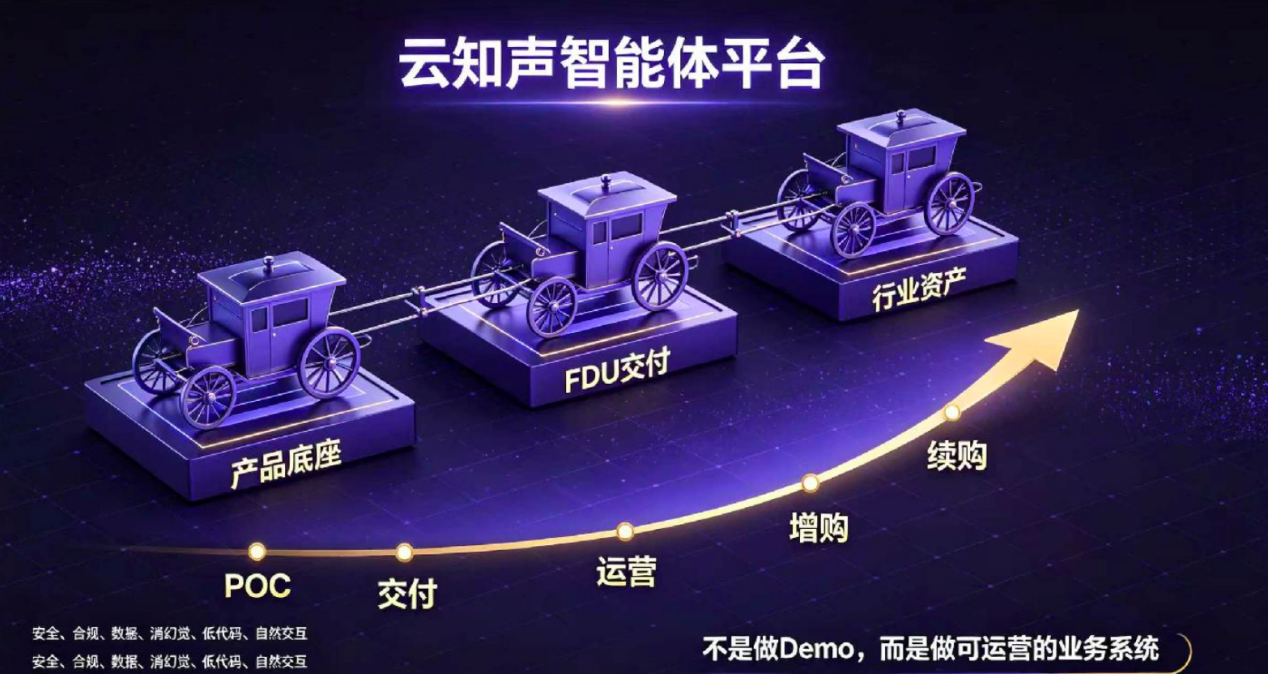
A Three-Tier Capability System: Turning AI Projects into Long-Term Assets
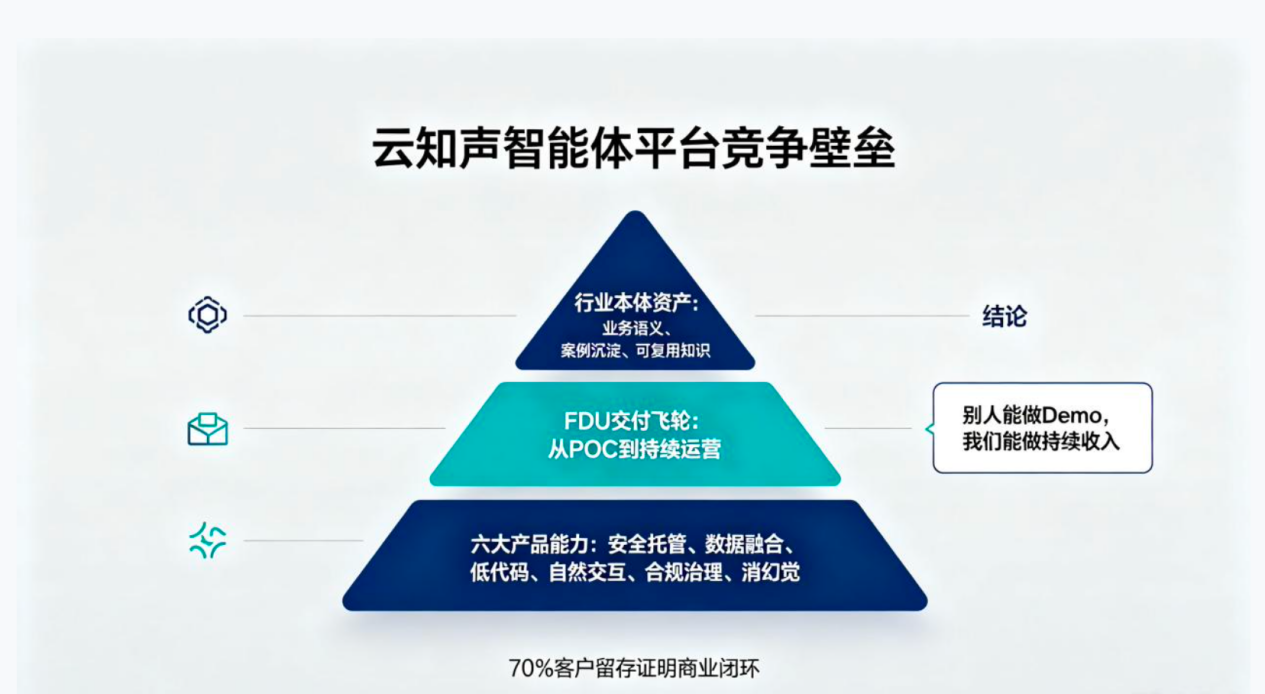
At the product-foundation layer, the Shouya Agent Platform provides the capabilities required for enterprise AI applications, including secure hosting, data integration, low-code development, natural interaction, compliance governance, and hallucination mitigation. Together, these capabilities provide a unified foundation for agent development and operation.
Enterprises can rapidly build applications around business needs without constructing complex AI infrastructure from scratch, and continuously iterate them in a secure, trustworthy, and controllable environment.
At the delivery layer, the platform introduces the FDU (Field Deployment Unit) continuous delivery model.
Unlike the traditional one-off project delivery model, FDU spans the entire process from technology validation and business launch to long-term operation. Agent capabilities are continuously optimized based on real business feedback, enabling AI applications to evolve with business needs and turning a one-time project engagement into continuous value creation.
Building on this foundation, the platform continues to capture the business semantics, domain knowledge, process experience, and project practices of enterprises and industries, progressively developing reusable industry ontology assets.
These assets can be reused across new business scenarios and projects, so each implementation no longer has to start from scratch. This enables enterprise AI capabilities to accumulate, iterate, and scale over time. The platform currently has a customer retention rate of 70%, validating its continuous operation and reuse capabilities through business practice.
Continuously Strengthening the Technology Foundation for Enterprise Applications
The scaled adoption of industrial AI depends on a stable and reliable underlying technology foundation.
Unisound continues to invest in core technologies including multimodal foundation models for healthcare, refined on-device small models for chips, and multimodal digital humans combining emotional and cognitive intelligence. These technologies have passed authoritative evaluations and achieved an internationally leading level, providing the technical foundation for continuous iteration of the Shouya Agent Platform in complex industry scenarios.
The Shouya Agent Platform has also obtained Huawei Ascend Native Application Development Technology Certification, further validating its compatibility, stability, and maturity within China's domestic AI hardware and software ecosystem. This supports enterprises in deploying agent applications within independently controlled technology systems.
From Point Solutions to Replication at Scale: Unlocking the Value of Industrial AI
Leveraging unified platform capabilities and long-standing industry experience, the Shouya Agent Platform has been deployed across multiple fields, including smart healthcare, smart government services, rail transit, intelligent cockpits, finance, and medical insurance.
Through ongoing implementation, Unisound is continually capturing and reusing the technical capabilities, delivery methods, and industry knowledge developed across different projects, enabling AI applications to progress from isolated pilots to replication at scale.
From models to agents, and from technology validation to business operations, the AI industry is entering a new stage that places greater emphasis on task completion and real-world value.
Looking ahead, Unisound will continue advancing technological innovation and industry integration under its 'Stronger Foundation Models, Deeper Applications' strategy. The company will further enhance the Shouya Agent Platform and deeply integrate foundation models and industry knowledge with real business workflows, making AI a productive capability that enterprises can operate, build upon, and continuously evolve.