Unisound Wins Two First Prizes and National Recognition in Chest Radiography Track at 2026 National Healthcare Security AI Medical Image Recognition Competition
The National Healthcare Security Administration recently announced the winners of the 2026 National Healthcare Security AI Medical Image Recognition Competition. The Guiyi Guidian Unisound Joint Innovation Team (H-090) and the X Vision Explorers Team (H-243), both formed with Unisound’s participation, won first prizes in the proprietary model and self-built model categories, respectively, in Track 8, “Intelligent Detection of Multiple Diseases Based on Chest X-rays.” The awards provide national recognition of Unisound’s technical capabilities in medical imaging AI.
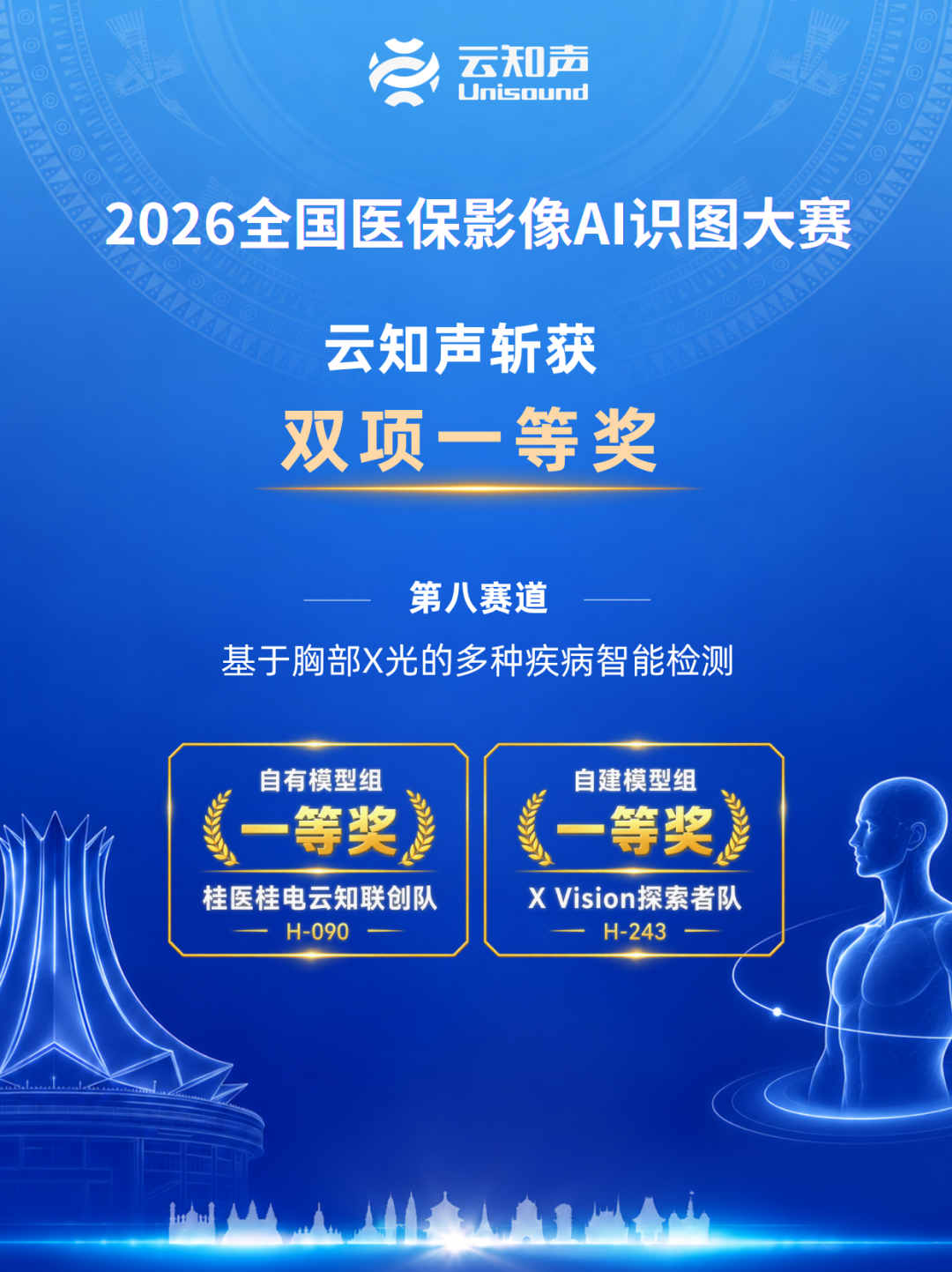
Jointly organized by the National Healthcare Security Administration and the People’s Government of Guangxi Zhuang Autonomous Region, the 2026 competition is China’s first national professional competition dedicated to AI-powered medical image recognition. Under the theme “Intelligent Image Recognition for the Future of Medical Imaging,” it featured eight tracks covering common diseases, including kidney, lung and breast cancers. All tracks were designed around real-world clinical diagnostic pathways and focused on applications of medical imaging AI with significant clinical value, with the aim of accelerating innovation and the adoption of new technologies, products and business models in healthcare and healthcare security.
The competition attracted 1,332 teams from universities, healthcare institutions, technology companies and research institutes in China and abroad, with 66 teams advancing to the in-person finals. Drawing on their technical work in multitask chest radiograph recognition, both teams involving Unisound ranked first in their respective categories in the preliminary round of Track 8 and went on to win first prizes in the finals.
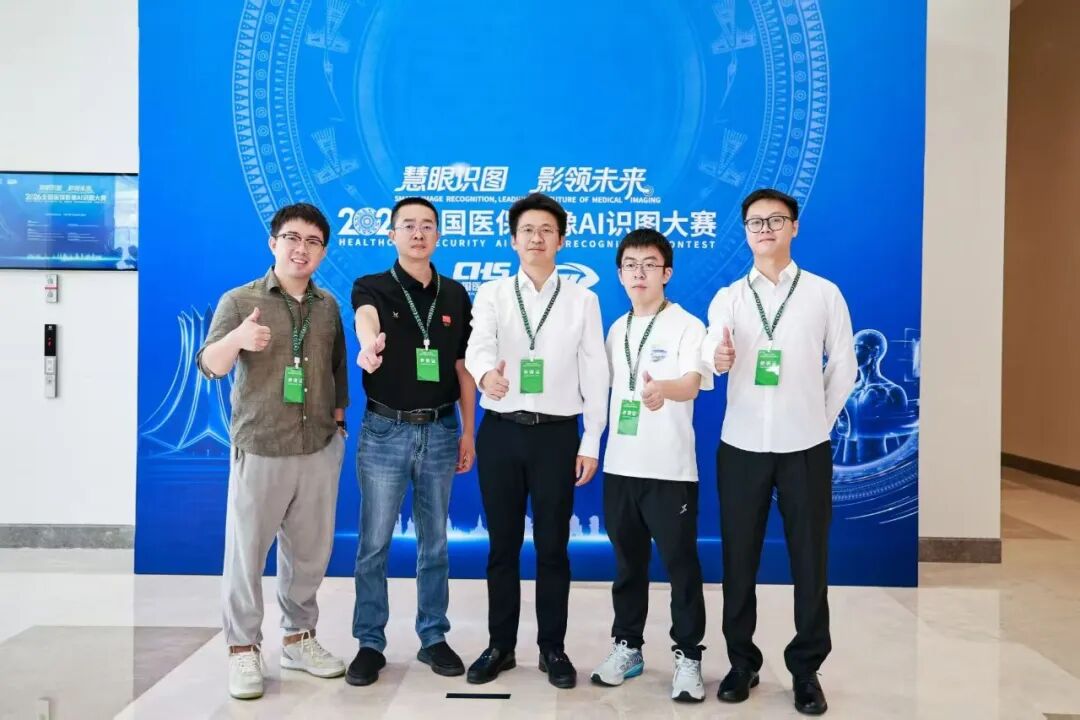
Proprietary model category — Guiyi Guidian Unisound Joint Innovation Team (H-090)
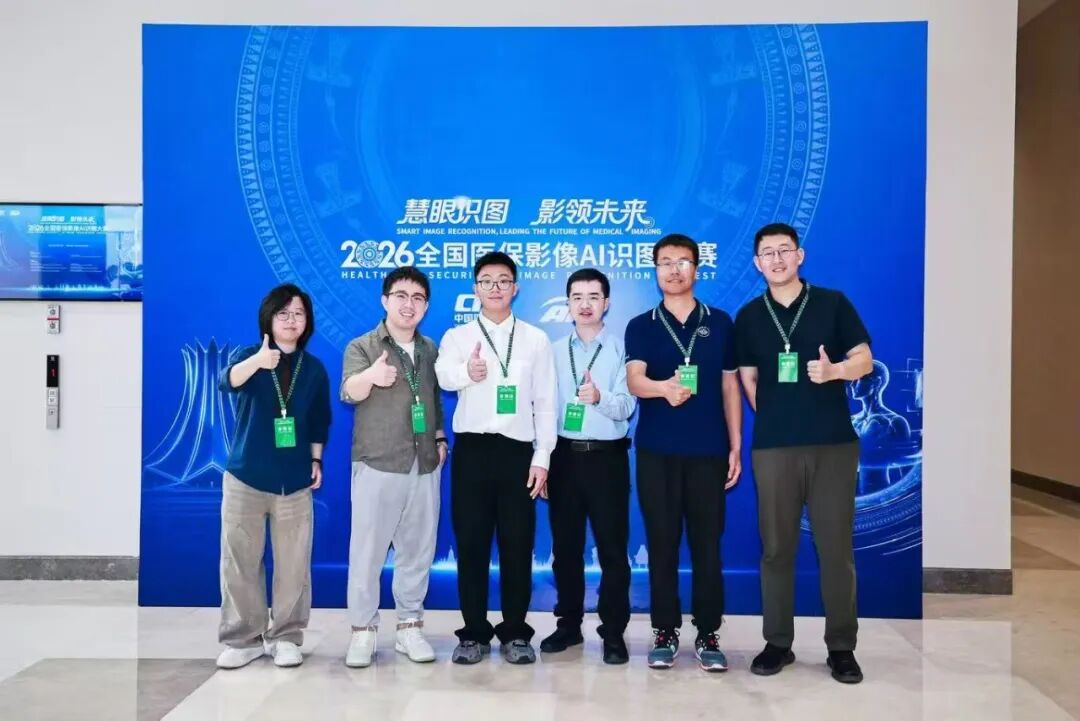
Self-built model category — X Vision Explorers Team (H-243)
Connecting Health Insurance Verification and Clinical Interpretation Through a Single Chest Radiograph
Chest radiography is one of the most commonly used clinical imaging examinations, with applications in both diagnosis and treatment and health insurance review. Physicians need to identify lesions and assess the severity of abnormalities, while reviewers need to examine the original images and supporting documentation to verify the authenticity of examinations and their compliance with relevant standards. These tasks involve different assessment targets and information requirements, calling for both specialized recognition methods and coordination across capabilities.
Track 8, “Intelligent Detection of Multiple Diseases Based on Chest X-rays,” directly tested this dual requirement. It assessed both image authenticity and compliance verification, as well as the detection of multiple abnormalities and the quantification of clinical attributes, requiring solutions to address the needs of health insurance review and assisted clinical interpretation.
To meet these requirements, the teams involving Unisound developed a coordinated multitask chest radiograph recognition solution that integrates image verification, lesion detection and quantitative analysis.
For health insurance verification, Unisound uses non-human image identification, spliced-image identification and duplicate-image retrieval to help reviewers screen for anomalous inputs and images that may share a common source. These capabilities provide leads for further review of original images, examination records and settlement documentation.
In clinical interpretation, identifying an abnormality is only the first step: physicians also need to understand its location, severity and size. Unisound combines detection of 17 categories of chest radiograph findings with pleural effusion grading and estimation of the maximum diameter of masses, providing localization and quantitative information that can be reviewed to support physicians’ assessments.
The Technical Progress Behind the Two First Prizes
The first prizes in the proprietary model and self-built model categories highlight complementary strengths. The former demonstrates how effectively Unisound’s existing data, pretrained models and image-analysis tool development framework can be adapted to specific tasks. The latter showcases the joint team’s ability to advance algorithms and coordinate multiple models using the baseline resources available. Together, they reflect Unisound’s continued progress in translating its accumulated medical AI expertise into practical applications.
In the proprietary model category, Unisound drew on its repository of chest radiographs numbering in the millions and its established tool development framework. Depending on the task, the team reused pretrained representations, fine-tuned models and combined heterogeneous models to build a dedicated chest radiograph analysis toolchain covering classification, retrieval, detection, grading and measurement. Across requirements analysis, data governance, model adaptation and platform delivery, the team used a unified evaluation framework and comparative experiments to guide technical choices, turning data resources and engineering experience into specialized capabilities for health insurance verification and clinical interpretation.
In the self-built model category, the team addressed differences in lesion scale, morphology and distribution through candidate generation by multiple heterogeneous detection models, followed by independent model verification. By combining evidence across multiple dimensions with learned adjudication, the approach reduces the blind spots of any single model. The team also incorporated anatomical structures and quantitative imaging information into specific tasks, providing reviewable analytical evidence for anomalous-image verification, lesion detection and assessment of clinical attributes. This work demonstrates its capabilities in task-specific algorithm development and multimodel coordination.
The technical work of both teams reflects Unisound’s sustained commitment to healthcare. Within the company’s broader medical AI portfolio, U2-Med, its foundation model for healthcare, healthcare security and pharmaceuticals, is built on the proprietary U2 general-purpose foundation model and integrates expertise in healthcare, public health insurance, pharmaceuticals and commercial insurance. It applies medical knowledge and business rules to scenarios such as medical record generation and quality control, health insurance review, commercial insurance claims and health management. In the previously announced MedBench 5.0 evaluation, U2-Med ranked first on both the large language model and agent leaderboards, scoring 72.4 and 99.2, respectively, demonstrating its capabilities in medical knowledge understanding and complex task processing.
In medical imaging, U2-RadiMed adds visual understanding to the specialized medical text foundation of U2-Med. It supports major imaging modalities, including chest X-rays, CT and MRI, as well as mixed inputs of text and single or multiple images. By combining imaging features with medical knowledge and clinical information, the model supports lesion detection and localization, report generation, medical visual question answering, and clinical reasoning and decision-making. These capabilities have also been tested in professional evaluations. In the previously announced MedBench 5.0 evaluation, U2-RadiMed topped the omni-modal foundation model leaderboard with a score of 57.2, leading the omni-modal medical image understanding track.
To support ongoing consultations and dynamic decision-making, Unisound has also developed U2-Med-World, a medical world model. By reconstructing real clinical trajectories and generating synthetic clinical scenarios, it creates an interactive virtual-patient consultation environment. This enables exploration of how AI can learn through simulated interactions to ask proactive follow-up questions, dynamically adjust its assessments and identify potential risks, progressively deepening its understanding of the ongoing care process.
The two first prizes recognize Unisound’s technical capabilities in medical image recognition and mark a milestone in its long-term commitment to healthcare, technological innovation and practical application.
Advancing Intelligent Oversight and Services in Healthcare Security
Addressing needs in health insurance fund oversight, payment management and public services, Unisound continues to integrate foundation models with domain expertise and business rules in healthcare security. It has developed application capabilities spanning health insurance fund oversight, DRG/DIP payment management, health insurance settlement list generation and intelligent knowledge-based question answering, using technological innovation to support implementation across these functions.
In exploring new applications, Unisound and Peking Union Medical College Hospital jointly developed a foundation-model-based solution for automatically generating DRG settlement lists. The solution won first prize in the finals of the 2024 National Smart Healthcare Security Competition, demonstrating the innovative value of foundation models in generating health insurance settlement lists.
As part of its work on intelligent healthcare security systems, Unisound has won contracts for projects involving a domain-specific healthcare security foundation model and agent applications in Jiangsu Province, continuing to explore the integration of domain expertise, business rules and foundation model capabilities. It has also won two key projects from a leading property and casualty insurance group: an agent for health insurance fund oversight and an agent for intelligent question answering on healthcare security knowledge, supporting oversight and public services.
Looking ahead, Unisound will further integrate medical imaging, foundation models and agent technologies. It will explore incorporating non-human image identification, spliced-image identification and duplicate-image retrieval into health insurance review workflows to help screen for anomalous images and images that may share a common source. These capabilities will provide additional evidence to verify the authenticity of examinations and their compliance with relevant standards, strengthening support for health insurance fund oversight.
By addressing clinical needs through technological innovation and improving healthcare security operations through intelligent applications, Unisound will continue to deepen its work in healthcare and healthcare security, ensuring that each advance in AI contributes to better care and the protection of health insurance funds.